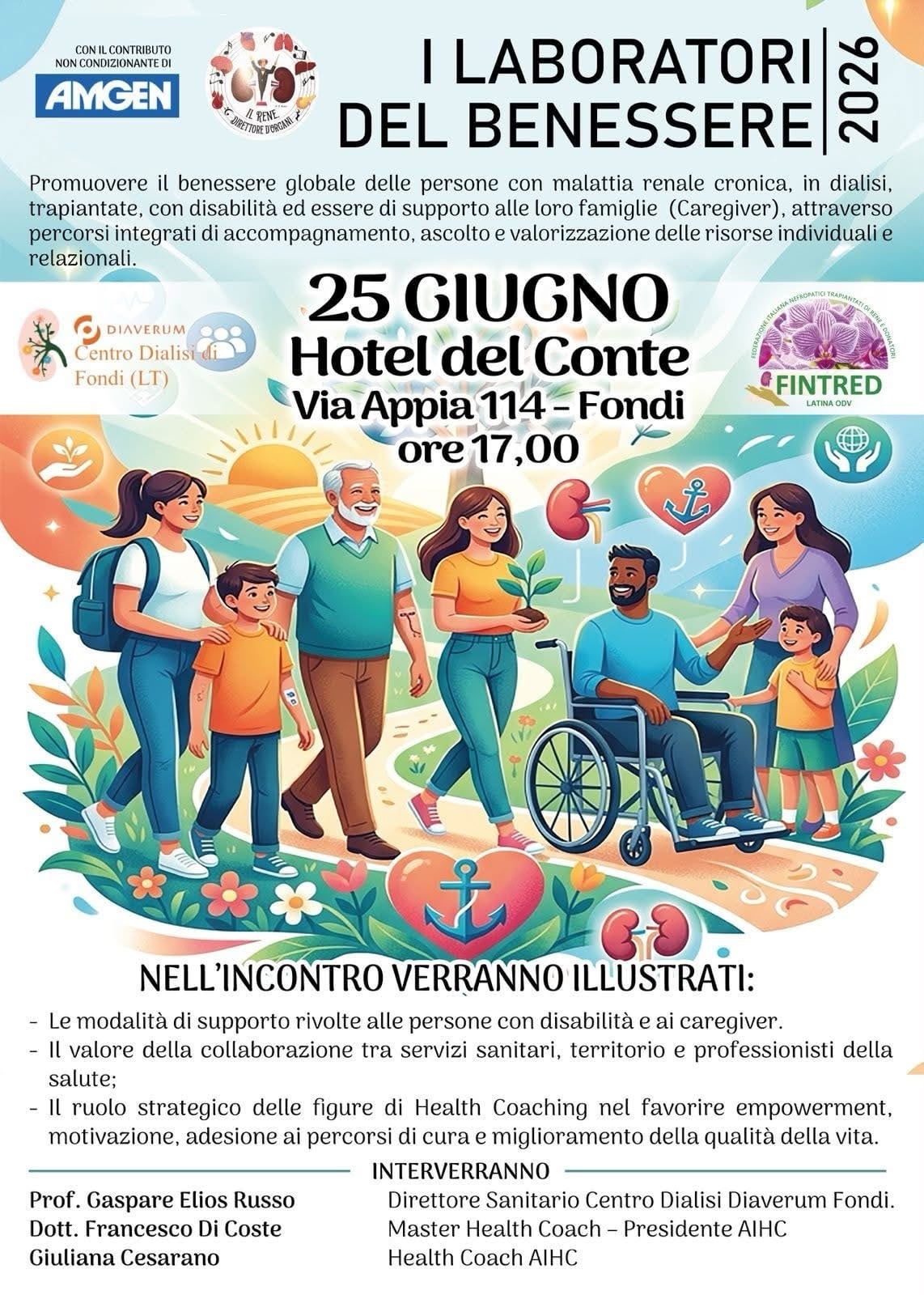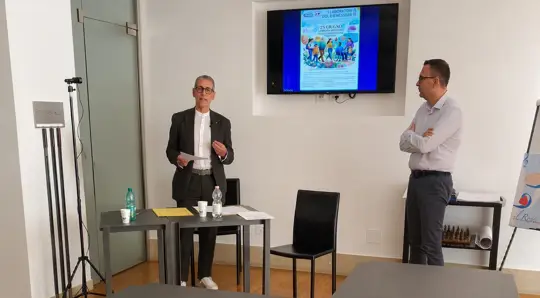
In Fondi, we had the opportunity to engage with General Practitioners, healthcare professionals and local stakeholders on a very concrete topic: the real involvement of patients and caregivers in care pathways.
The discussion highlighted the importance of continuous collaboration between institutions, healthcare professionals and patients, with the shared goal of improving overall physical and psychological well-being. This requires a collective effort based on listening, presence and long-term support. In this context, the Mayor also acknowledged the ongoing work of FINTRED, the Italian Federation of kidney disease patient associations, thanking the association for its constant presence in supporting patients within the local community.
One of the key takeaways was the need to go beyond clinical care alone. Supporting patients means encouraging their active involvement and helping them feel part of their own journey, rather than identifying solely with their condition.
A central challenge remains treatment adherence, especially among younger patients. As highlighted during the discussion, some transplant and dialysis patients tend to say “I feel fine like this” and may not consistently follow their therapy. Addressing these situations and helping patients build a perspective for their future is essential to prevent them from feeling stuck in their journey.
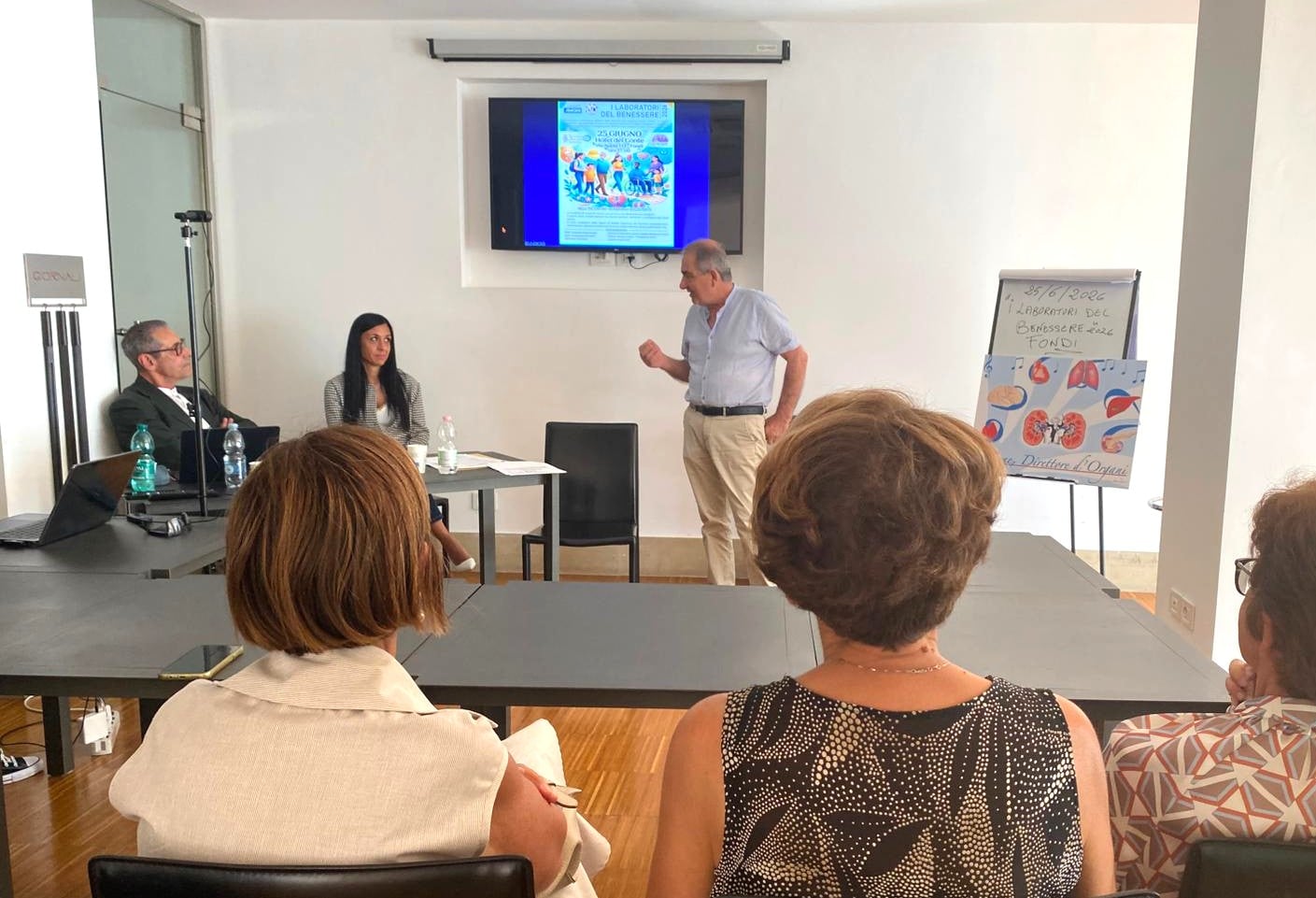
In this context, the role of healthcare professionals is crucial, not only from a clinical perspective, but also from a human one. It becomes increasingly important to position the clinic as a place of listening, dialogue and support, where patients can openly share concerns, find answers and feel accompanied over time.
This approach contributes to improving adherence, strengthening motivation, supporting the path towards transplantation and facilitating social and professional reintegration. Because first and foremost, people need to feel understood.
The discussion also highlighted the importance of a structured approach based on active listening, realistic goal-setting, family involvement and multidisciplinary collaboration-key elements to building effective and sustainable care pathways.
Patients’ and caregivers’ voices further reinforced these insights. One patient shared how their initial fear of not understanding dialysis was overcome thanks to the way they were welcomed and supported. This is accompanied by the account of her carer, who shared a seemingly minor but highly significant story linked to a visit to the Ninfa Gardens organised by Prof. Russo:
“He would never get on the bus before, but he joined the visit because you were there with him, Professor.”
A simple story that shows how trust, relationships and human presence are an integral part of care.
The message is clear: quality is not only defined by clinical outcomes, but by the ability to build a care pathway together with patients and those who support them-creating relationships, offering perspective and ensuring that no one feels alone in their journey.
Special thanks go to the Mayor of Fondi, Vincenzo Carnevale, to Prof. Gaspare Elios Russo, Medical Director of the Diaverum Center in Fondi, to Francesco Di Coste and Giuliana Cesarano, Health Coaches & Health Educators, to Giuseppe Iacovelli for FINTRED, and to Amgen for their unconditional support, which made this initiative possible.